Who are the Young Anabaptists?
An interview with Liam Kachkar
MC Canada Release | April 21st, 2026

Liam Kachkar is a city planner, member of First Mennonite in Edmonton, and the new North America representative for Mennonite World Conference's (MWC) Young Anabaptist Committee (YAB).
Liam spent time growing up at Mennonite Church Alberta’s (MCA) Camp Valaqua, and volunteered his time in both Mennonite Church Alberta and Mennonite Church Canada at different times, including helping plan the 2019 Gathering in Abbotsford. Last year, MCA selected him to go to Germany and Zurich, Switzerland, as a Global Youth Summit participant. After coming back to Canada, he was offered a chance to connect more broadly with Mennonite World Conference.
In this interview, Liam talks about his experience as a representative on the Young Anabaptist Committee, and the gifts that churches around the world can offer one another.
Who are the Young Anabaptists, and what is their role in the context of Mennonite World Conference?
The Young Anabaptists were started essentially as an advisory group to the Mennonite World Conference executive committee. They can bounce ideas off us to say “hey, how does this impact you folks?” We meet with them once a year in person.
The other role of Young Anabaptists is to help plan Global Youth Summits. These happen every three years, not six, like the MWC Assemblies. Having a chance to get together every three years gives people an opportunity to maybe attend two or three before they age out of the group. We're involved in planning the Global Youth Summit that will be happening in Tanzania in 2028. We’re in the process of creating resources, learning opportunities, and mentorship structures so that when people get to Tanzania, they've got a clearer sense of what's going to happen at the General Counsel meetings and what their role is.
We’re in the process of creating resources, learning opportunities, and mentorship structures so that when people get to Tanzania, [young adults have] a clearer sense of what's going to happen at the General Counsel meetings and what their role is.
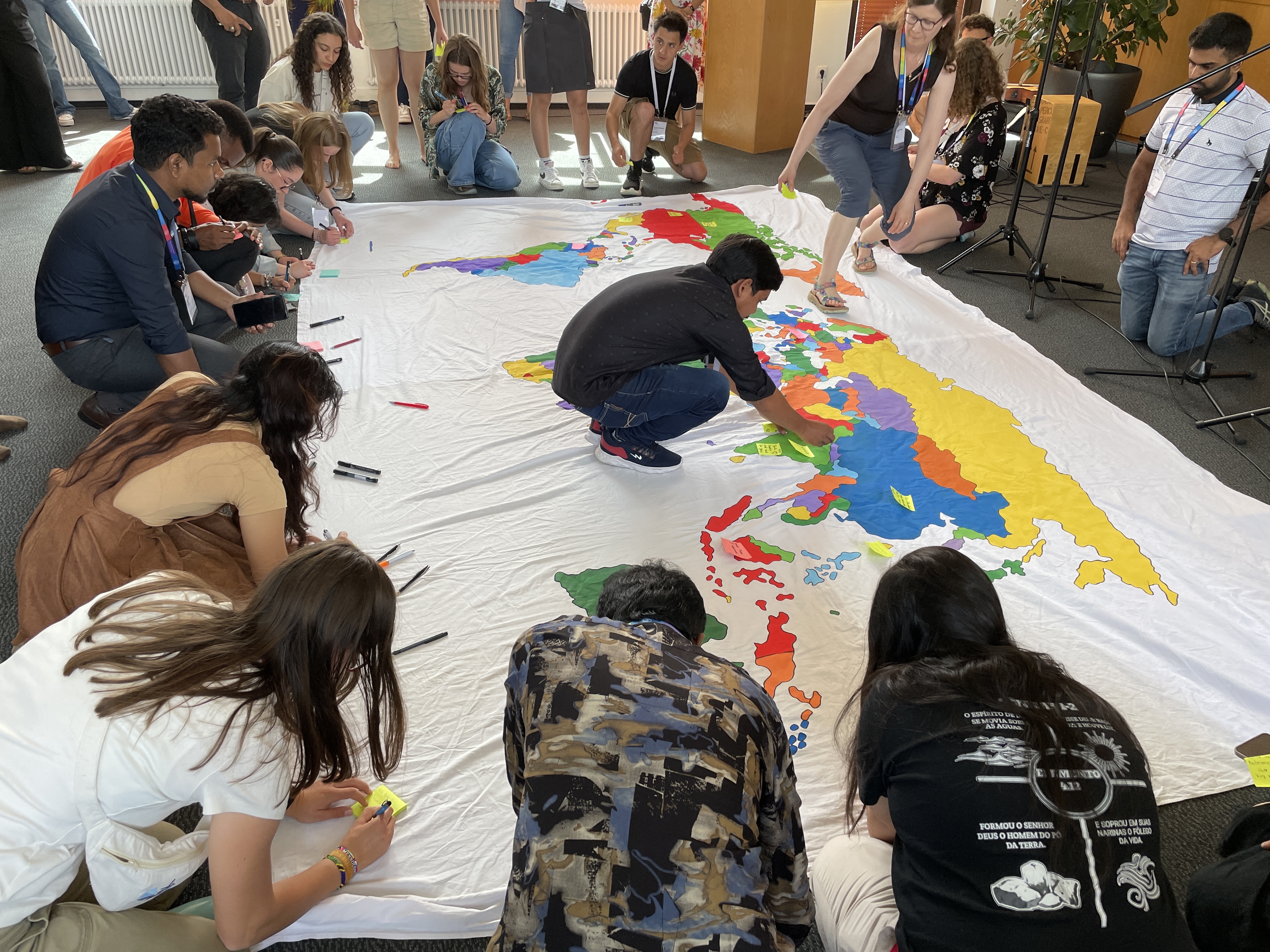
At the Mennonite World Conference level, you often speak about gifts. What gifts do you see the church in Canada bringing to the global church?
Last year at the Global Youth Summit (GYS) in Germany I noticed that about 50% of the members from the GYS were from Europe, but huge churches in cities like Hamburg or Amsterdam were sending only one or two young adults per church. The only time they have 10-15 people or more is when they have province wide or national gatherings. So to come to GYS where there were about 200 young adults and youth, they were like, “I’ve never seen that many Mennonites my age before!”
It made me realize that at both First Mennonite Edmonton and Foothills Mennonite in Calgary, where I’ve both spent a lot of time, we have basically the same number of young adults that some of these European countries have at a countrywide level.
In Alberta and British Columbia, I've been really, really excited about a number of initiatives to bring people together between congregations and just lean into different interests and joys that young adults have. And when I start to compare us to other Christian organizations that have so many more members, I catch myself and say, “the number of young adults engaged in our church is what people in other places in the world wish they could have.” It is a gift of the Canadian church to see that we have a really solid starting point in the work that we do.
Another gift here in Canada is that we have young people who are so interested and are so excited about taking their faith beyond just their local congregations. I would say it's more common to have people who are like, “okay, I've got my faith, how can I take this out into the world?” than the other way around in Canada.
I just encourage other young adults in Canada or people with young adults in their lives to lean into that interest of connecting more broadly in the world. Learn about other Anabaptist traditions in other parts of the world. Ask how we tie into the rest of the world, which is a little countercultural right now. And that's a real gift that Canada has that we can continue to offer.
What gifts should the Canadian church be excited to receive from the global church, or specific other regions?
In my role at Mennonite World Conference I was reminded pretty quickly that I'm not the Canadian rep, I'm not the United States rep, I'm the North America representative. With all the conversations and tension we've had with the United States amidst tariffs and threats to Canada being its own country, it’s been a really interesting space for me to say “how do I represent the voices of all these churches?”
I think a gift of the rest the global church is reminding us in Canada that it's not just the Canadian church, but we have partners, brothers, sisters, siblings around the world in our faith. Actually having a face to the name changes the way that you interact with that space in your day-to-day when you see it on the news or when it comes up in conversations with neighbors and colleagues at work.
With all the conversations and tension we've had with the United States amidst tariffs and threats to Canada being its own country, it’s been a really interesting space for me to say “how do I represent the voices of all these churches?”
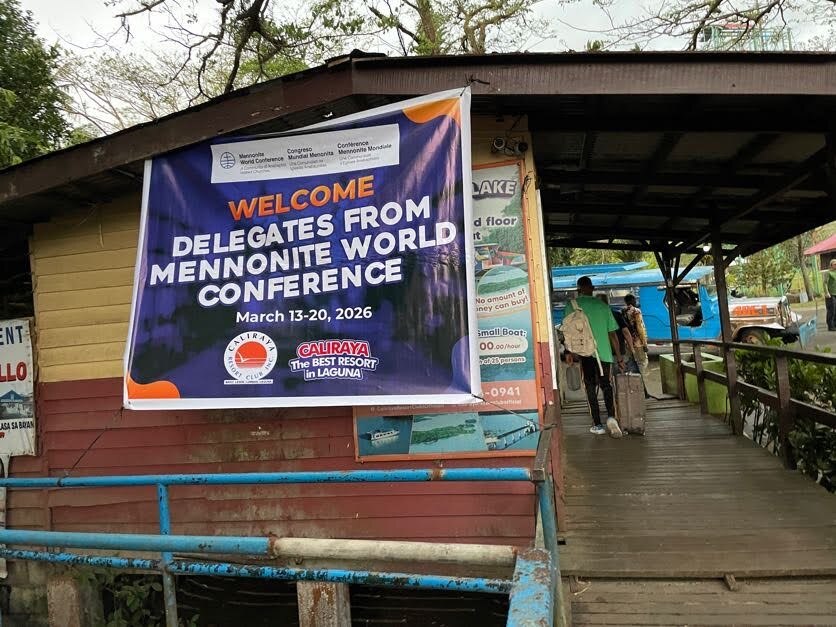
Tell me about your time in the Philippines.
While we were in the Philippines, MWC hosted an annual renewal event, which is a way to bring MWC to the local context. We had speakers from Central America, Africa, Europe and from Asia, but we also had a mix of young adults, older people, and locals that were participating there. Doug Klassen was one of the speakers there and Doug spoke to “What does it mean to be Anabaptist and people of peace?”
In a world that is actively militarizing, what does it look like to be young people who have ancestors or stories of people who did not dodge conscription, but found alternative forms of service when there was a military conscription? The question that he left with all the people in the Philippines and all the other International leaders there was “If something similar happened in Canada today, would young Mennonites choose the same way?”
And so in my work, where I’m trying to be a peacemaker and a good listener across the US and Canada, what does it mean to be a church of peace in a world that is actively arming up and having more distrust for neighbour? What does it look like for us as young people to be part of the narrative that says what does it look like to actually build trust, build bridges, even when it's not safe to do so in our context?
What does it mean to be a church of peace in a world that is actively arming up and having more distrust for neighbour? What does it look like for us as young people to be part of the narrative that says what does it look like to actually build trust, build bridges, even when it's not safe to do so in our context?
What are the Young Anabaptist’s hopes in the future?
Some of our hopes can be summed up in our upcoming YABs Fellowship Week, which is happening the third week of June! Our Theme for this year is Solidarity in Action: from Fellowship to Impact. Our goals are to:
- Strengthen unity among young anabaptists
- Help deepen the understanding that they have of their Anabaptist identity
- Ask what it looks like to move from fellowship to mission and action
- Provide space for global prayer and connection
We also have dreams for the Global Youth Summits. The Global Youth Summits should not just be a social club where you get together every three years. We should have fun and meet a lot of people, but that shouldn’t be all that happens. We should speak to each other’s faith, and be able to come away wondering “What action can I take in my community, whether that’s living truer into my faith or being a more confident leader in our churches and communities?”
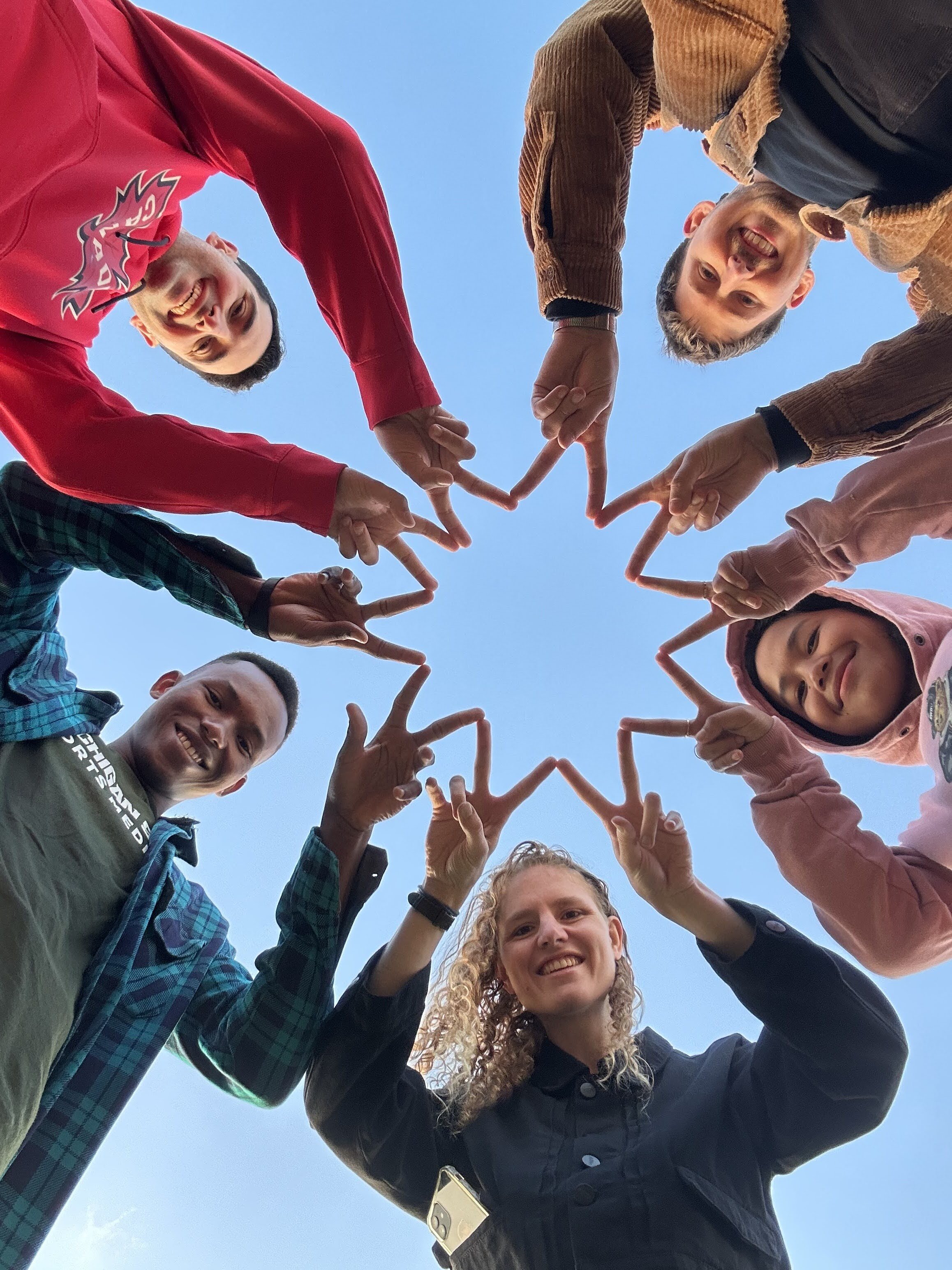
Check out more at the Young Anabaptists Social media.